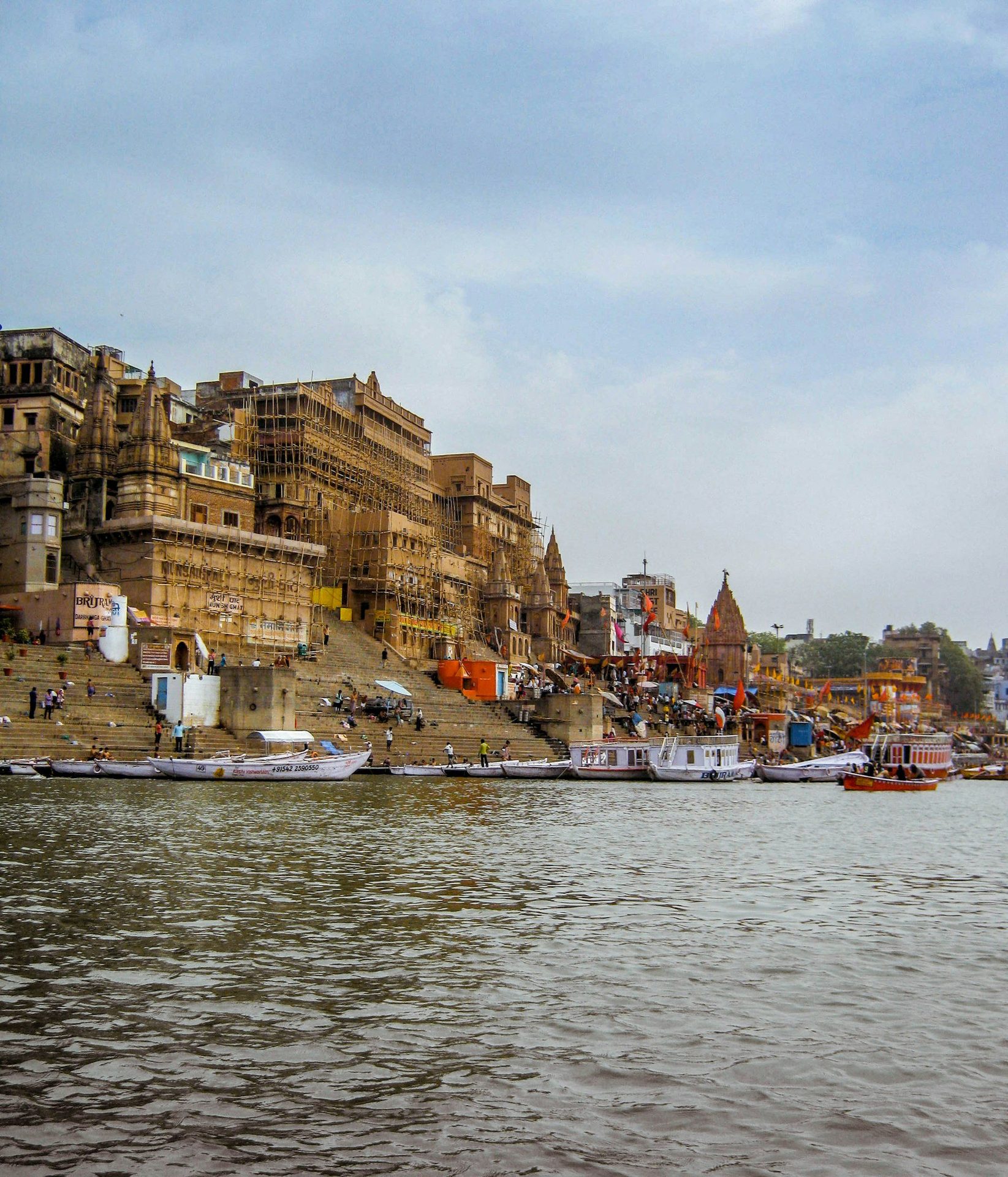
In India, spirituality is not an abstraction confined to Sunday halls. It is woven into the daily rhythm of water, fire, stone, and breath. For three thousand unbroken years, pilgrims have descended stone staircases into sacred currents to salute the rising sun, release floating flames, and confront the mystery of existence with clear-eyed reverence. This section helps visitors understand spiritual places in India as part of a thoughtful India journey.
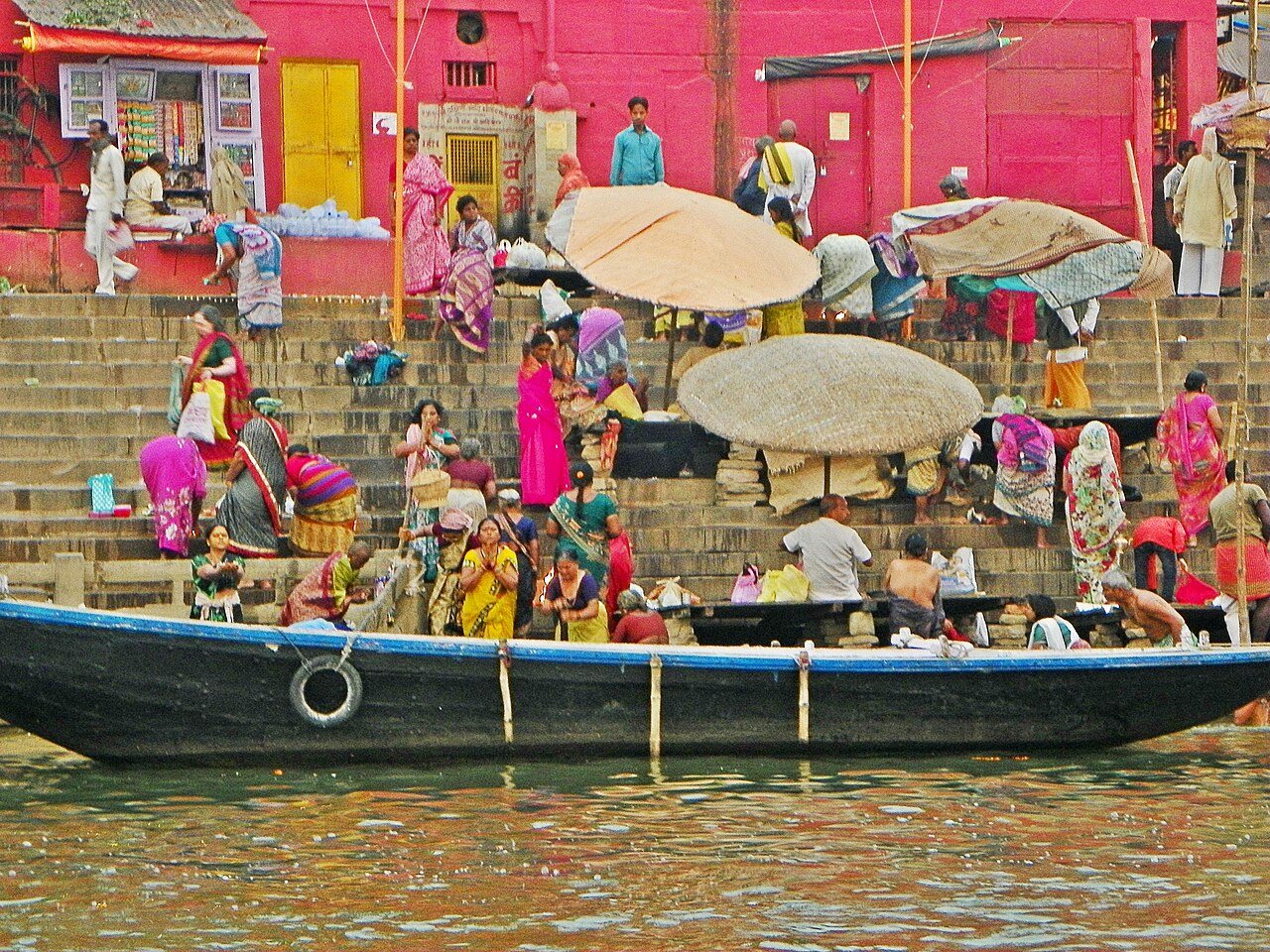
To understand an Indian ghat, one must first understand that to the Indian mind, a river is never merely water (H₂O). A river is *Maa* — a divine, conscious maternal energy descending from celestial realms to sustain physical crops and dissolve human sorrow. This section helps visitors understand India spiritual tourism as part of a thoughtful India journey.
Emerging from Himalayan glaciers at Gomukh, Gangotri, the Ganges flows 2,525 kilometers across northern India. It is believed that bathing in her water purifies ancestral karma, and dying upon her banks grants immediate liberation from the endless wheel of rebirth. For international travelers, this section adds practical context to India tourism.
Flowing through Central India's basalt gorges in Madhya Pradesh, the Narmada is considered so spiritually potent that mere sight of her (*darshan*) is said to equal bathing in other rivers. Pilgrims undertake the 2,600 km foot parikrama circumambulation of her entire banks. This section helps visitors understand India spiritual tourism as part of a thoughtful India journey.
The Yamuna mirrors the mystical divine play of Krishna in Mathura and Vrindavan, while the Kaveri is the sacred mother of Tamil Nadu and Karnataka, cradling ancient temple cities like Srirangam and Thanjavur. This section is especially useful for travelers researching Agra travel.
A riverbank in India experiences two distinct daily spiritual zeniths: the meditative, introspective stillness of first dawn, and the fiery, resonant choreographic celebration of dusk. This section helps visitors understand India spiritual tourism as part of a thoughtful India journey.
05:30 AM • DAWN STILLNESS
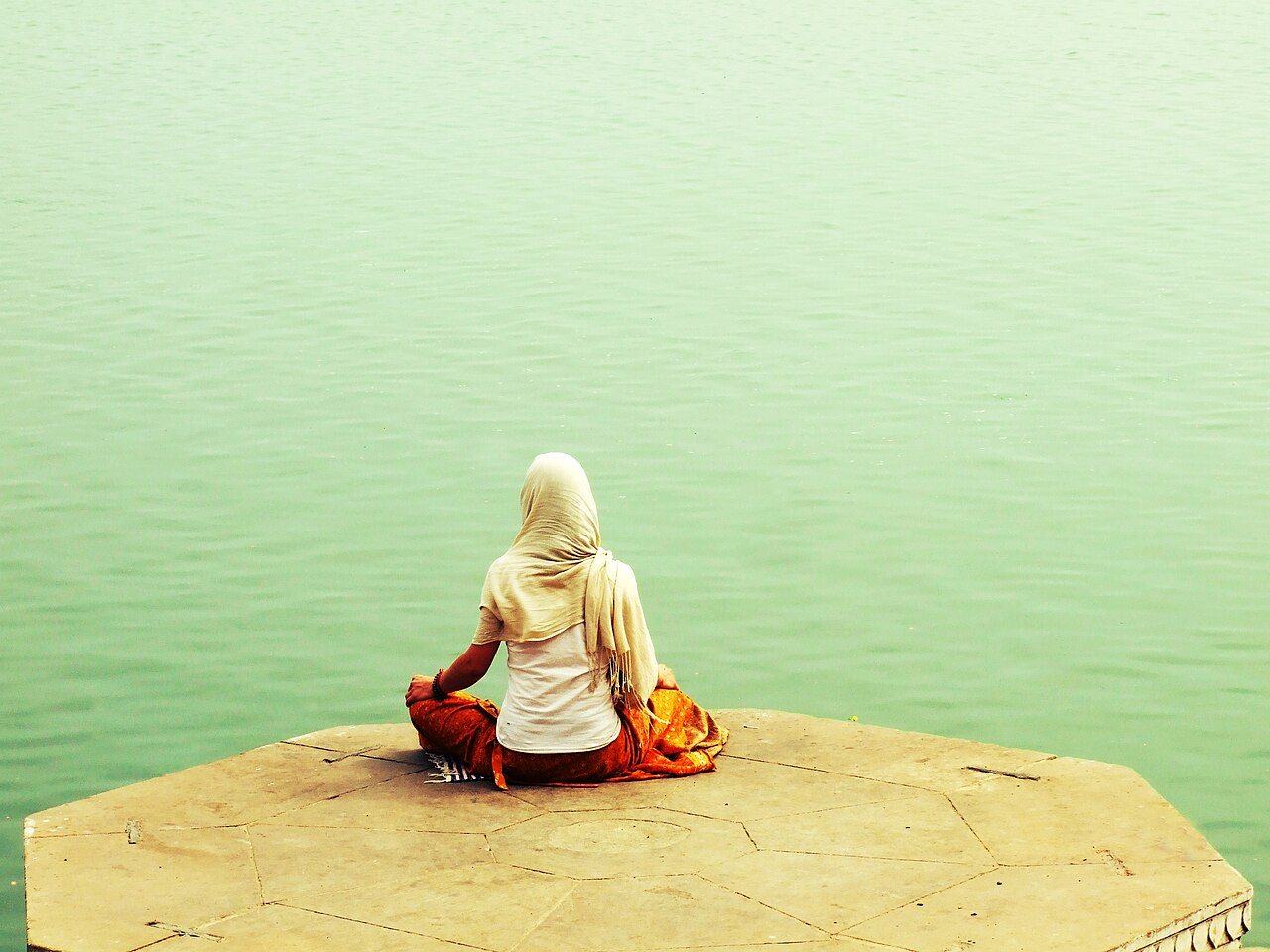
Long before sunrise, while the city's alleyways remain asleep, the river stirs. Devotees in white cotton descend the cool stone steps barefoot. With cupped palms (*anjali*), they lift river water toward the horizon in silent salutation to Surya, the sun god. Sitarists practice morning ragas under umbrella platforms; washermen rhythmically slap damp muslin on stone; wrestling akhadas kick up red clay. The river is blue-grey, calm, and deeply personal. This section is especially useful for travelers researching things to do in Varanasi.
06:45 PM • TWILIGHT ILLUMINATION
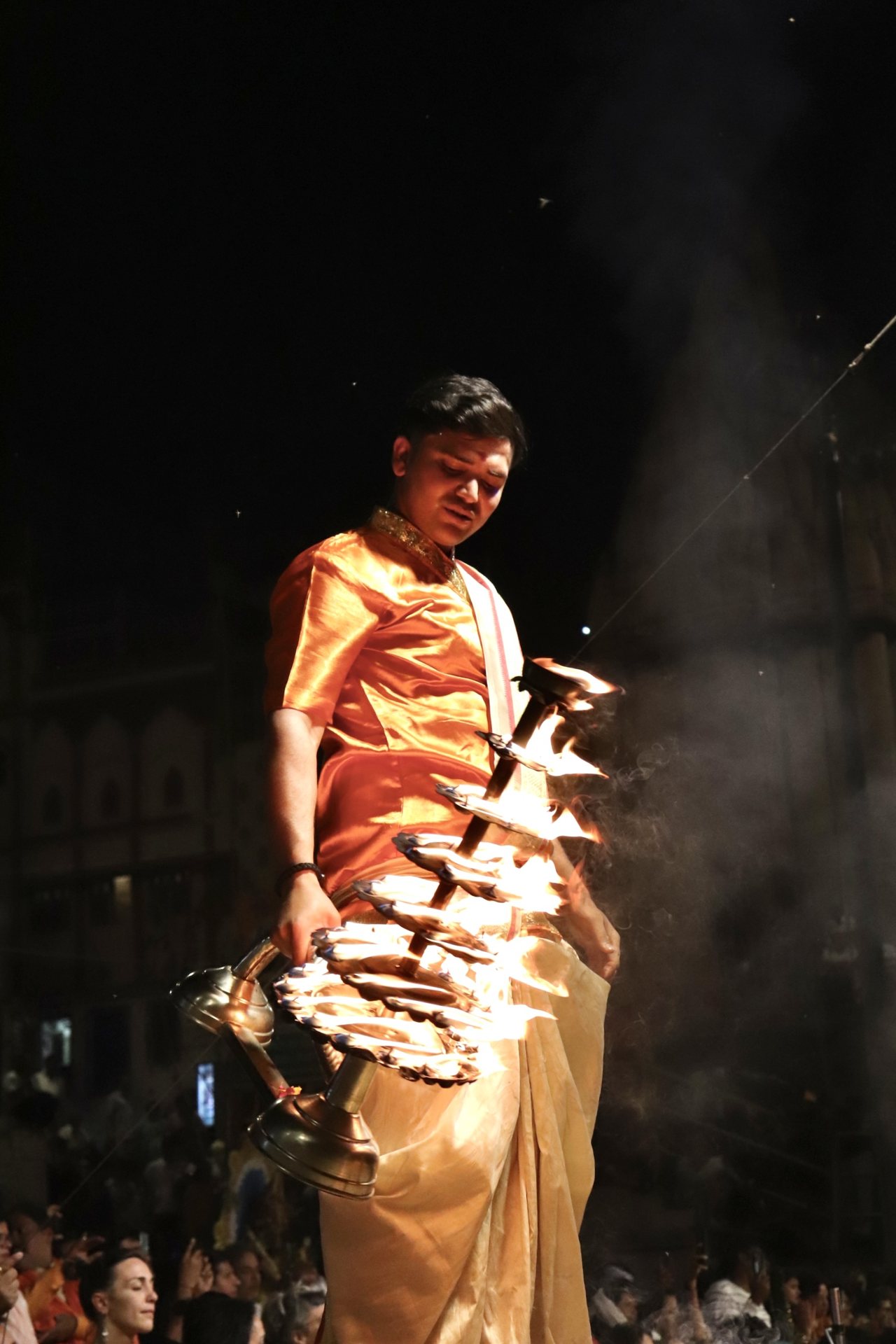
As purple twilight descends, Dashashwamedh Ghat transforms into a cosmic amphitheater. Seven young Brahmin priests, clad in saffron and raw silk, take their places upon raised wooden podiums. In unison, they blow conch shells whose ancient drone clears psychic noise, then hoist multi-tiered brass lamps holding 108 camphor flames. Heavy bronze bells toll, cymbals clash, and thousands of pilgrims in wooden boats release floating leaf diyas that sparkle across the ink-black water. This section helps visitors understand India spiritual tourism as part of a thoughtful India journey.
A *ghat* is simply a flight of steps leading down to water, but culturally, each ghat carries a specific purpose, social contract, and spiritual resonance. In Varanasi alone, 84 distinct ghats stretch continuously along a seven-kilometer crescent. This section helps visitors understand spiritual places in India as part of a thoughtful India journey.
Examples: **Assi Ghat**, **Panchganga Ghat**, **Kedar Ghat**. These steps are dedicated to daily spiritual ablutions (*snan*), yoga practice, floral offerings to Shiva lingas, and philosophical debates among visiting sadhus under woven bamboo parasols (*chhatris*). This section helps visitors understand India spiritual tourism as part of a thoughtful India journey.
Examples: **Dashashwamedh Ghat**, **Raj Ghat**, **Parmarth Niketan (Rishikesh)**. Engineered with wide stone terraces to accommodate thousands of spectators, daily dusk fire rituals, boat boarding points, and seasonal festivals like Dev Deepawali. This section also gives international visitors practical context for Indian traditions.
Examples: **Manikarnika Ghat** and **Harishchandra Ghat**. These are the famous burning ghats where funeral pyres have burned day and night without interruption for millennia. In Hindu cosmology, death is not a taboo tragedy to be swept into sterile clinical corners; it is the ultimate transition (*Mahaprasthan*). Watching wood stacked and smoke rising into the river mist is an exercise in contemplating *Anitya* — the absolute impermanence of physical form. This section helps visitors understand India spiritual tourism as part of a thoughtful India journey.
“The wooden oar cuts the current with a heavy, hollow thud. The city rises from the mist not like a skyline of modern stone, but like a mountainous cliff of palaces, minarets, and shrines built over centuries. A solitary priest stands knee-deep in gold-lit ripples, his lips moving silently to the Gayatri Mantra. Here, the boundary between life and death is not a wall, but a gentle step into the river.” For international travelers, this section adds practical context to India tourism.
What shocks most first-time international visitors is not the intensity, but the total absence of dread. Children fly kites on the upper terraces, elderly women laugh over stainless-steel chai glasses, and boatmen discuss monsoon yields, while fifty yards away, fires crackle on the pyres. Life, mortality, and eternity sit comfortably side by side.
As foreign guests, we are welcomed with extraordinary hospitality to witness intimate moments of human faith. In return, we owe our hosts discretion, humility, and quiet respect. This section helps visitors understand India spiritual tourism as part of a thoughtful India journey.
Language unlocks meaning. Here is a field glossary of key spiritual concepts you will encounter on Indian riverbanks. For international travelers, this section adds practical context to visit India.
[g-haat] • noun This section helps visitors understand India spiritual tourism as part of a thoughtful India journey.
A broad flight of masonry steps descending from a riverbank, temple tank, or lake into the water for ritual bathing, boat landing, or cremation.
Key themes include things to do in Varanasi, Varanasi travel, Varanasi Ganga Aarti, helping international travelers plan an informed and memorable journey.
[aar-tee] • noun This section helps visitors understand spiritual places in India as part of a thoughtful India journey.
A devotional ceremony in which light from wicks soaked in ghee or camphor is waved clockwise before a deity or sacred river accompanied by hymns.
[mohk-sha] • noun For international travelers, this section adds practical context to India tourism.
Spiritual liberation and release from Samsara (the continuous cycle of death and rebirth), achieved when the soul realizes its unity with the Infinite.
[teer-tha] • noun For international travelers, this section adds practical context to travel to India.
Literally “a shallow ford or river-crossing.” Philosophically, a holy place or pilgrimage site where the boundary between mortal world and the divine becomes thin.
[dee-yaa] • noun For international travelers, this section adds practical context to visit India.
A small clay or dried-leaf lamp holding oil or clarified butter (ghee) and a cotton wick, floated onto rivers as a personal prayer and symbol of light dispelling darkness.
[pruh-saad] • noun For international travelers, this section adds practical context to India travel.
A vegetarian food offering (sweets, fruits, or puffed rice) presented to a deity during worship and then redistributed to devotees as sanctified grace.
While Varanasi is the queen of the ghats, contemplative waterside traditions flourish from the high Himalayas to Central India's sandstone fortresses. This section also gives international visitors practical context for cultural experiences in India.
The Glacial Foothills • River Ganga
Where the Ganges leaves the Himalayas. Rishikesh offers serene forest ashrams and quiet yoga meditation, while Haridwar's Har Ki Pauri ghat witnesses torrential evening fire ceremonies under starry Himalayan night skies.
Ahilya Fort • River Narmada
A poetic, untouristed gem where stone cenotaphs (*chhatris*) of the Holkar dynasty rise directly above the wide Narmada. Far quieter than Kashi, famous for handloom silk weaving along the riverbanks.
Desert Oasis • Sacred Brahma Lake
Surrounded by 52 bathing ghats on the edge of the Thar Desert. One of the few sanctuaries in the world dedicated to Lord Brahma, echoing with continuous chants and evening temple bells.
The Holy Confluence • Kumbh Mela Grounds
The mythical meeting point of three rivers: the brown silt of the Ganga, the blue-green clarity of the Yamuna, and the subterranean Saraswati. The epic host of the Kumbh Mela.