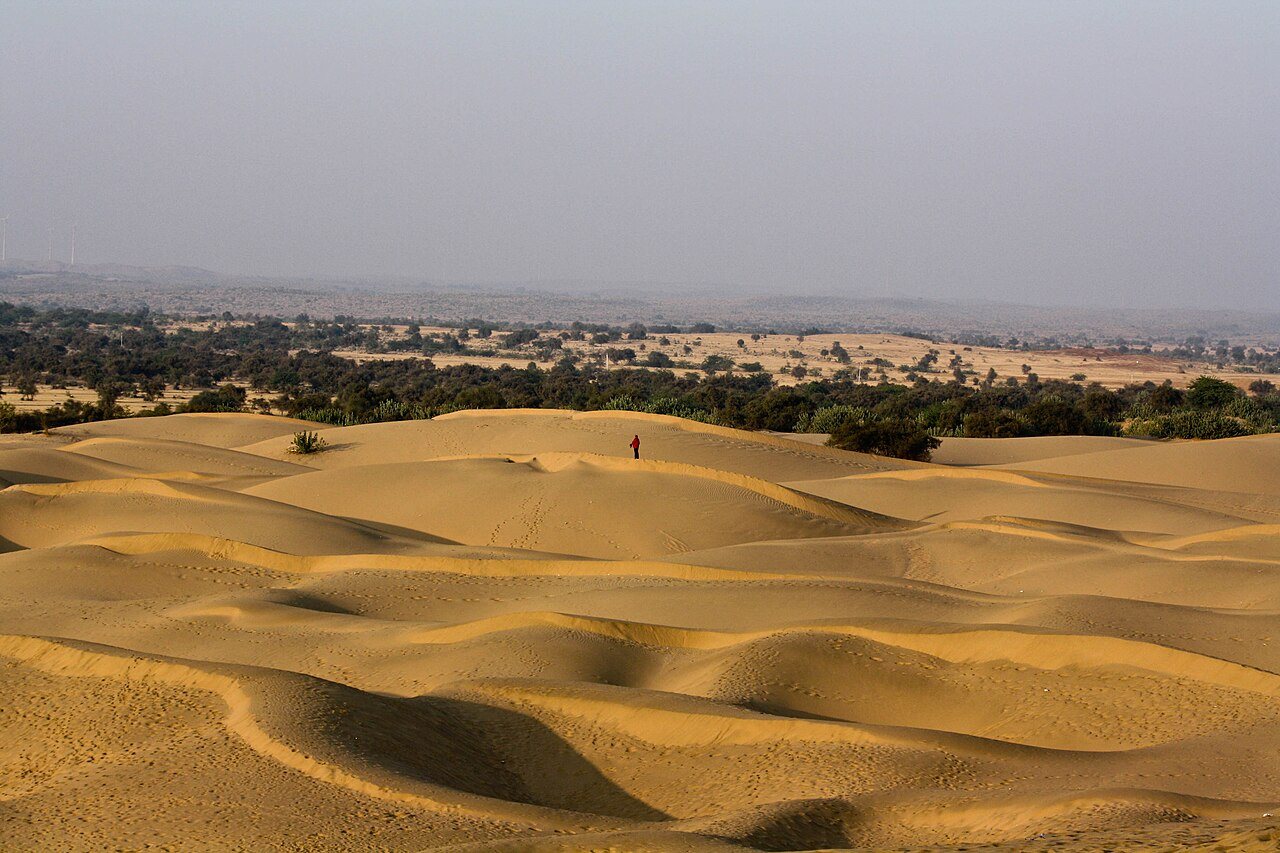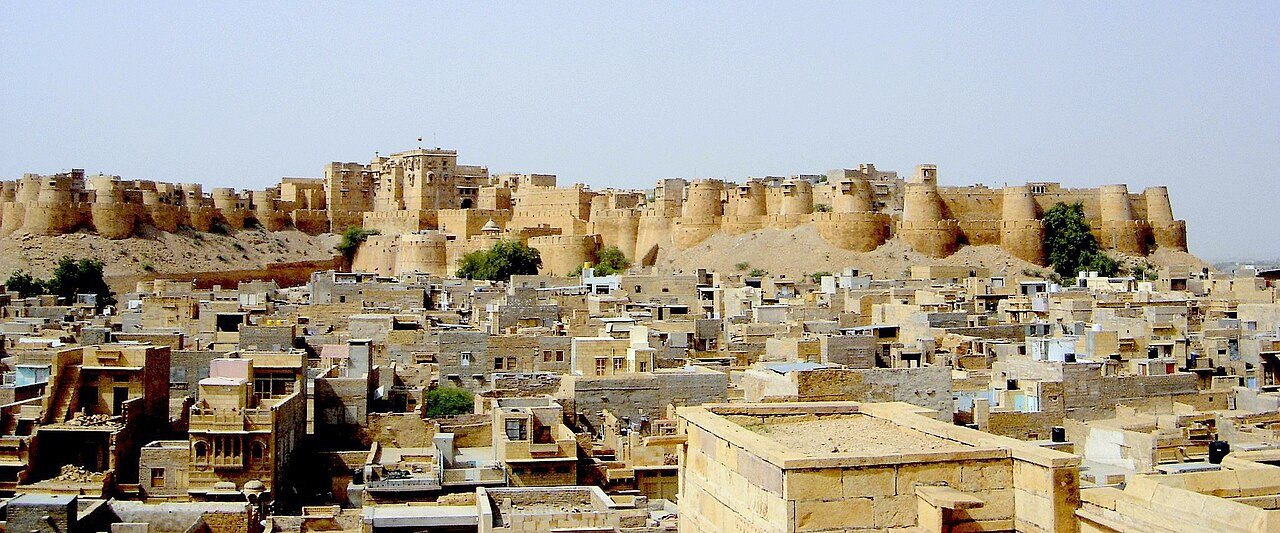
Rising like a titanic sandcastle out of the shifting dunes of the Great Indian Desert, Sonar Qella is India's only living medieval fortress. Inside its ninety-nine ramparts, four thousand citizens still live, weave, worship, and harvest rare desert rain. This section is especially useful for travelers researching Rajasthan travel.
Across the world, medieval fortresses are museums: ticket gates open at nine, guards patrol empty parade grounds, and ropes keep travelers behind glass vitrines. But Jaisalmer’s Sonar Qella (the Golden Fortress), founded atop the triangular Trikuta Hill in 1156 CE by Bhati Rajput king Rawal Jaisal, refuses to be a dead relic. For international travelers, this section adds practical context to India travel guide.
Step through the triple-bent stone gateway of Suraj Pol at dawn, and you enter a functioning village ecosystem. Schoolchildren in crisp uniforms sprint down labyrinthine alleys paved with sun-warmed yellow limestone; priests blow conch shells at the seven interconnected Jain temple complexes; cows calmly chew marigold stems beside doorstep rangolis; and silversmiths tap delicate filigree ankle bracelets with tiny iron hammers.
How local *Silawats* (stone carvers) transformed Jurassic sedimentary limestone into ventilated tapestries. For international travelers, this section adds practical context to India tourism.
The stone quarried at nearby Habur is unique in the world: a rich golden Jurassic limestone that contains fossilized iron particles. When freshly cut from the earth, it is soft enough to be sculpted with hand chisels; under centuries of desert sun and oxidation, it hardens into durable armor while taking on a radiant honey-amber patina that glows incandescent gold at sunset.
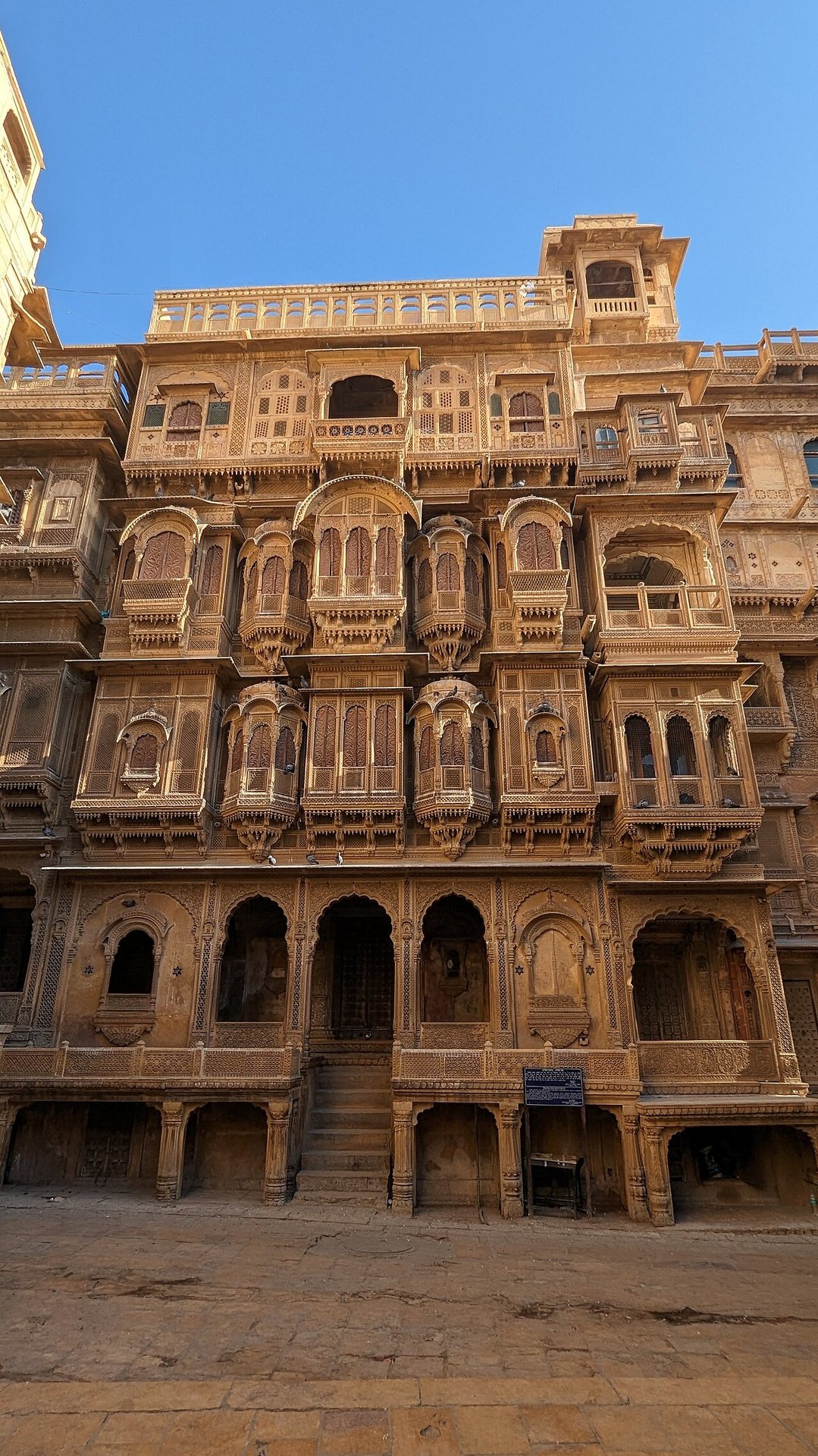
At Patwon ki Haveli, built between 1805 and 1860 by a wealthy Jain merchant family of brocade and opium traders, this stone reaches its supreme expression. The five-mansion complex features sixty distinct protruding balconies (*jharokhas*), each carved with geometric open-work screens (*jalis*). These are not merely decorative flourishes; they are ingenious thermodynamic devices. By forcing hot desert winds through hundreds of tiny perforated stone apertures, the Venturi effect accelerates air velocity and cools the interior courtyards by up to 8°C without electricity.
In a region where annual rainfall averages less than 150 millimeters, how did an imperial capital thrive for eight centuries? The secret lies in one of the most sophisticated decentralized rainwater harvesting systems ever devised. For international travelers, this section adds practical context to travel to India.
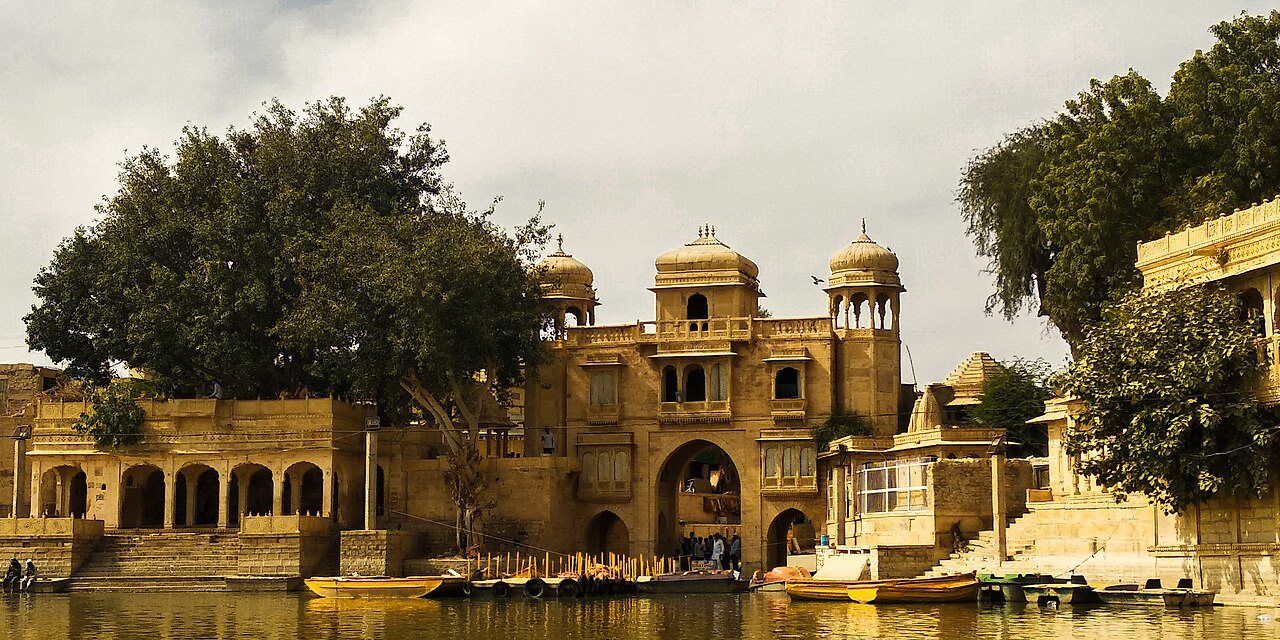
Constructed in 1367 CE by Maharawal Gadsi Singh, Gadsisar Lake was not simply a reservoir. It was the apex of an interconnected chain of nineteen rainwater catchment basins linked by stone sluices and underground percolation conduits (*beris*). Every rooftop in the city tilted backward toward lime-plastered cisterns (*tankas*) sealed with heavy stone lids, ensuring that a single rainstorm provided pure drinking water for a family for twelve continuous months.
Six essential cultural waypoints inside and around the golden fortress: For international travelers, this section adds practical context to visit India.
Akhai Pol, Suraj Pol, Ganesh Pol, and Hawa Pol. Built at sharp 90-degree angles to prevent charging war elephants from building battering ram momentum. This section also gives international visitors practical context for cultural experiences in India.
Key themes include Rajasthan tourism, places to visit in Rajasthan, India travel, helping international travelers plan an informed and memorable journey.
Interconnected by hidden aerial walkways and underground corridors, dating between the 12th and 15th centuries. Marvel at the ceiling mandalas and the Jinbhadra Suri manuscript library. This section helps visitors understand spiritual places in India as part of a thoughtful India journey.
Located just outside the fort walls. Salim Singh's peacock roof brackets and Nathmal Haveli, carved simultaneously by two brothers from opposite sides without blueprints. For international travelers, this section adds practical context to India tourism.
An intricately carved yellow sandstone royal archway framing tranquil waters adorned with domed chhatris and winter migratory birds from Siberia. This section helps visitors understand spiritual places in India as part of a thoughtful India journey.
The seat of the Maharawals. Features mirrored bedroom ceilings, royal armor, and panoramic rampart views where antique brass cannons still guard the desert horizon. For international travelers, this section adds practical context to visit India.
Listen to hereditary desert troubadours playing the bowed *kamaicha* and *khartal* castanets, singing ballads of desert sandstorms, camels, and immortal love. For international travelers, this section adds practical context to India travel.
Because the medieval hill was not designed for modern pressurized plumbing, excessive wastewater seepage has caused structural subsidence in several fort bastions. Responsible travelers increasingly choose to stay in heritage havelis just outside the fort walls and explore the citadel on foot during the day. This section is especially useful for travelers researching Rajasthan tourism.
Avoid crowded, noisy party camps with loud speakers in central Sam dunes. Instead, book an ethical slow safari toward Khuri or the desert national park buffer zone where you sleep on traditional cots under the pristine Milky Way canopy.
Direct overnight trains (such as the Ranikhet Express or Jaisalmer Express) connect Jaisalmer station with Delhi, Jaipur, and Jodhpur. Jaisalmer Civil Airport operates seasonal domestic flights from Delhi and Mumbai during peak winter months (October – March).
Sample authentic desert survival cuisine: Ker Sangri (wild desert beans and caper berries simmered with yogurt and dried red chilies), Dal Baati Churma with desi ghee, and Bajra Roti (pearl millet flatbread).
Explore the full cultural collection: six dedicated standalone editorial archives covering living culture, ecology fieldwork, railway sociology, and culinary terroirs. For international travelers, this section adds practical context to India tourism.