Vintage wooden electric tram navigating the historic streets of Kolkata
🚋 URBAN DOCUMENTARY • BENGAL FIELD JOURNAL

Kolkata Travel — Heritage, Culture and Things to Do

India’s intellectual and artistic cradle is not a monument frozen in amber. It is an unhurried, argumentative, intensely poetic living metropolis where vintage wooden electric trams still ring through rain-slicked lanes and conversation is an art form. International travelers can use this section when exploring India heritage sites.

1873 CE Asia's Oldest Tramway
Adda The Art of Endless Discourse
Kumartuli Sculptors of Sacred Ganga Clay
College Street Mile of Secondhand Books

CHRONICLE I • TEMPO OF EXISTENCE

The City That Resists Being Rushed — Best Places To Visit In India

To arrive in Kolkata after the feverish tech campuses of Bengaluru or the corporate glass canyons of Mumbai is to undergo a deceleration of the human pulse. Kolkata does not run on quarterly revenue cycles; it operates on the rhythm of tea steeping in unglazed earthenware cups (*bhar*), the creak of paddle ceiling fans in colonial high-ceilinged drawing rooms, and the leisurely unfolding of an afternoon debate on Rabindranath Tagore, Karl Marx, or East Bengal football club. For international travelers, this section adds practical context to best places to visit in India.

Along the riverfront at Princep Ghat, the morning starts with rowboats drifting on the pewter surface of the Hooghly under the colossal cantilever of the Howrah Bridge. Porters with wicker baskets of orange marigolds navigate the slippery flagstones of the 150-year-old Mallick Ghat flower market. The air smells of crushed ginger, wet alluvial soil, steam from coal-fired brass samovars, and yesterday’s rain.

"Kolkata does not ask you to consume it; it invites you to read it. Every shuttered green Venetian louver, every decaying Corinthian capital wrapped in banyan roots, tells of a city that was once the second capital of the British Empire and chose instead to become the capital of the human mind."
Classic yellow Ambassador taxi on tree-lined street in North Kolkata
HERITAGE ARTERIES

Canary-yellow Hindustan Ambassador taxis cruising past shuttered 19th-century zamindar mansions in Shyambazar.

CHRONICLE II • SOCIOLOGY OF SPEECH

Adda: The Art of Unhurried Conversation — India Tourism

More than an informal chat, adda is recognized by UNESCO anthropologists as Bengal’s unique civilizational institution. For international travelers, this section adds practical context to India tourism.

Adda has no agenda, no formal beginning, and no determined conclusion. It happens on *roks* (the raised masonry stoops outside traditional North Kolkata townhouses), around corner tea stalls over ten-rupee glasses of aromatic Assam leaf brew, and beneath the portraits of national poets in the cavernous Indian Coffee House on College Street.

Here, Nobel laureate Amartya Sen, filmmaker Satyajit Ray, and thousands of university scholars sat on rattan bentwood chairs amidst a din of clattering porcelain saucers and smoke. Topics transition effortlessly from international geopolitical crises to the proper thickness of hilsa fish gravy (*ilish macher jhol*) to the poetry of Jibanananda Das. To participate in adda is to acknowledge that ideas and human connection are inherently more valuable than productivity.

CHRONICLE III • LIVING INDUSTRIAL ARCHAEOLOGY

The Wooden Trams of Calcutta — Travel To India

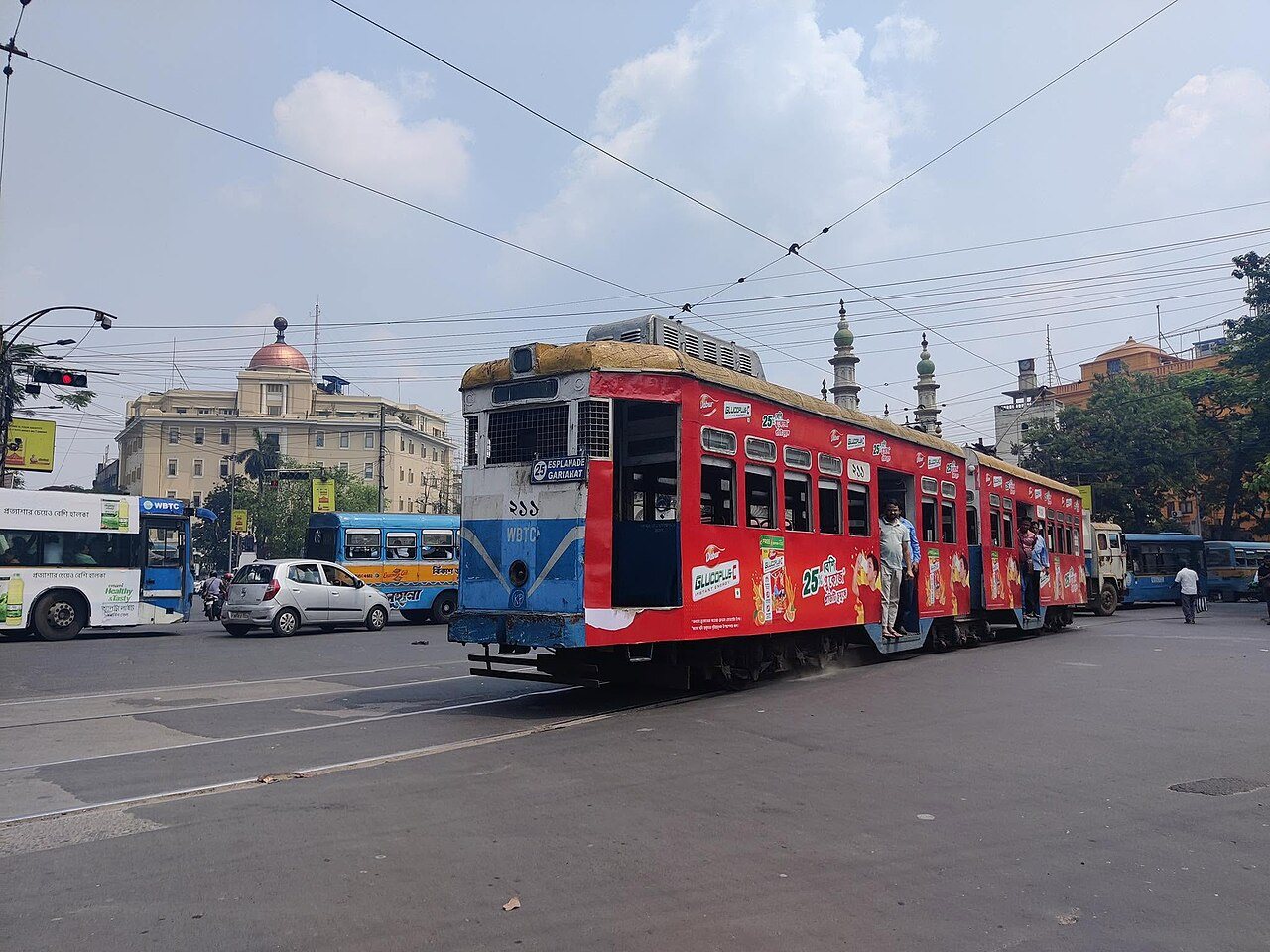
Vintage red and cream Calcutta electric tramcar trundling along street rails
RUNNING SINCE FEBRUARY 24, 1873

The Metallic Clang of the Foot Gong — Visit India

The Calcutta Tramways Company (CTC) operates the oldest operating electric tram network in all of Asia. As the twin wooden carriages trundle across the green expanse of the Maidan toward Esplanade, electric overhead poles spark against copper catenary wires with brilliant blue flashes. For international travelers, this section adds practical context to visit India.

Inside, varnished slatted-wood benches, iron-mesh windows, and small brass switches evoke a voyage through time. The driver operates a heavy rotary brass controller with one hand while rhythmically stomping a mechanical floor foot-pedal that sounds a resonant brass bell (*ding-ding*) to warn pedestrians. It is urban transit stripped of urgency—quiet, non-polluting, and deeply poetic.

CHRONICLE IV • ANCESTORS IN CLAY

Kumartuli: Where the River Hooghly Becomes Gods — India Spiritual Tourism

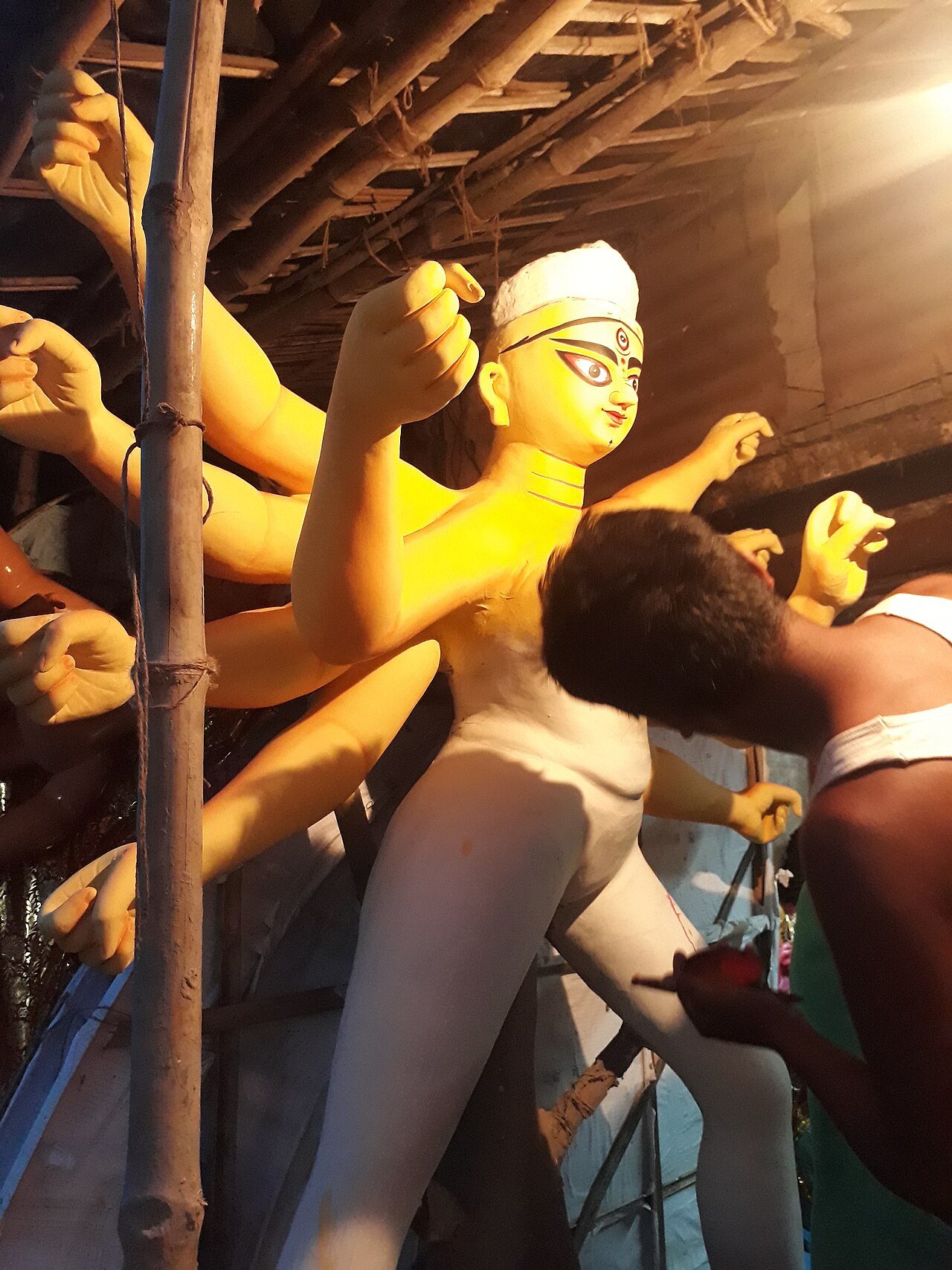
In the narrow, labyrinthine alleys of Kumartuli along the northern riverbank, generations of hereditary sculptors (*kumors*) perform an annual miracle of sacred transformation. Out of bamboo armatures, rice straw, and rich alluvial clay dredged from the sacred bed of the Hooghly, they sculpt monumental effigies of the ten-armed warrior goddess Durga. This section helps visitors understand India spiritual tourism as part of a thoughtful India journey.

During the final stage—Chokkhu Daan (the gifting of the eyes)—the master artisan fasts, sits before the clay goddess in absolute silence, and paints the large, luminous almond eyes with a fine squirrel-hair brush. On the tenth day of Durga Puja (Dashami), these magnificent sculptures are returned to the river waters in immersion (*visarjan*), completing the sacred lifecycle from river clay to divinity and back to water.

Master sculptor shaping sacred clay Durga idol in Kumartuli artisan studio
CHRONICLE V • THE MILE OF BOOKS

Boi Para: College Street's Paper Labyrinth — Best Indian Food To Try

College Street (*Boi Para*, literally "Book Neighborhood") is the largest secondhand book market in the world, stretching for over a mile and a half past the historic rotunda of Presidency University, Sanskrit College, and Calcutta University. For international travelers, this section adds useful context to best Indian food to try.

Key themes include best places to visit in India, India tourism, India spiritual tourism, helping international travelers plan an informed and memorable journey.

Flanked by tiny wooden stalls stacked ten feet high with rare out-of-print volumes—from first-edition Russian translations of Tolstoy published by Mir Publishers to Sanskrit grammar commentaries and Bengali literary journals—this street is an open-air academy. Generations of scholars have bartered here, perching on wooden footstools while stallkeepers track down obscure texts without computer catalogs, locating treasures purely through muscle memory and generational knowledge.

ACOUSTIC MOTIF 01

The Cha-Wallah's Whistle & Bhar Clatter

The sharp hiss of steam from boiling milk, the rhythmic breaking of spent terracotta cups into recycle bins, and the invitation of "Dada, ek cup cha!"

ACOUSTIC MOTIF 02

The Dual-Note Tram Gong

The heavy foot-activated brass bell resounding across the tree canopies of the Maidan, signaling that steel wheels are turning once more.

ACOUSTIC MOTIF 03

The Dhak Drum Crescendo

During autumn festivities, large barrel-shaped wooden dhak drums adorned with white heron feathers reverberate through neighbourhood pandals.

FIELD NOTES • TRAVELER INTELLIGENCE

Navigating Kolkata with Ease & Respect — India Tourism

🚕 Yellow Ambassador Taxis

The iconic yellow Ambassador is a Kolkata trademark. Always ask drivers to use the digital meter ("Meter chalu korun"), or utilize ride-hailing apps (Uber, Ola, Yatri Sathi) for clear fixed fares from Howrah Station or Netaji Subhash Chandra Bose Airport (CCU). For international travelers, this section adds practical context to India tourism.

🚋 Riding the Tram

Hop aboard Route 24 or Route 36 from Esplanade or Gariahat. Fares are a nominal ₹7. Board slowly, take a window seat beneath the wooden shutters, and enjoy a meditative 45-minute traverse across the city's green lung.

🍯 Sweets: Mishti Doi & Sondesh

Bengali confections are legendary culinary art. Visit legendary 18th/19th-century confectioneries like K.C. Das (inventor of the canned Rossogolla), Balaram Mullick, or Girish Chandra Dey. Try baked mishti doi served in cool porous clay pots.

🌅 Dawn River Crossing

Take the public commuter ferry from Fairlie Place Ghat to Howrah Station for ₹6. Standing on the wooden upper deck as the sun rises over the Hooghly offers the finest photographic perspective of the river without traffic congestion.

CONNECTED DISPATCH

Beyond the Golden Walls: Life in Jaisalmer — Rajasthan Travel

Leave the riverine streets of Bengal for the arid sands of Rajasthan: explore Sonar Qella, India's only living fortress carved from honey-colored Jurassic sandstone. This section is especially useful for travelers researching Rajasthan travel.

READ NEXT DISPATCH→
REGIONAL CORRIDOR

East & Northeast India: River Lands & Living Bridges — India Spiritual Tourism

Continue eastward into the Brahmaputra valley, tea estates of Assam, and the cloud forests of Meghalaya. This section helps visitors understand India spiritual tourism as part of a thoughtful India journey.

Explore East & Northeast →