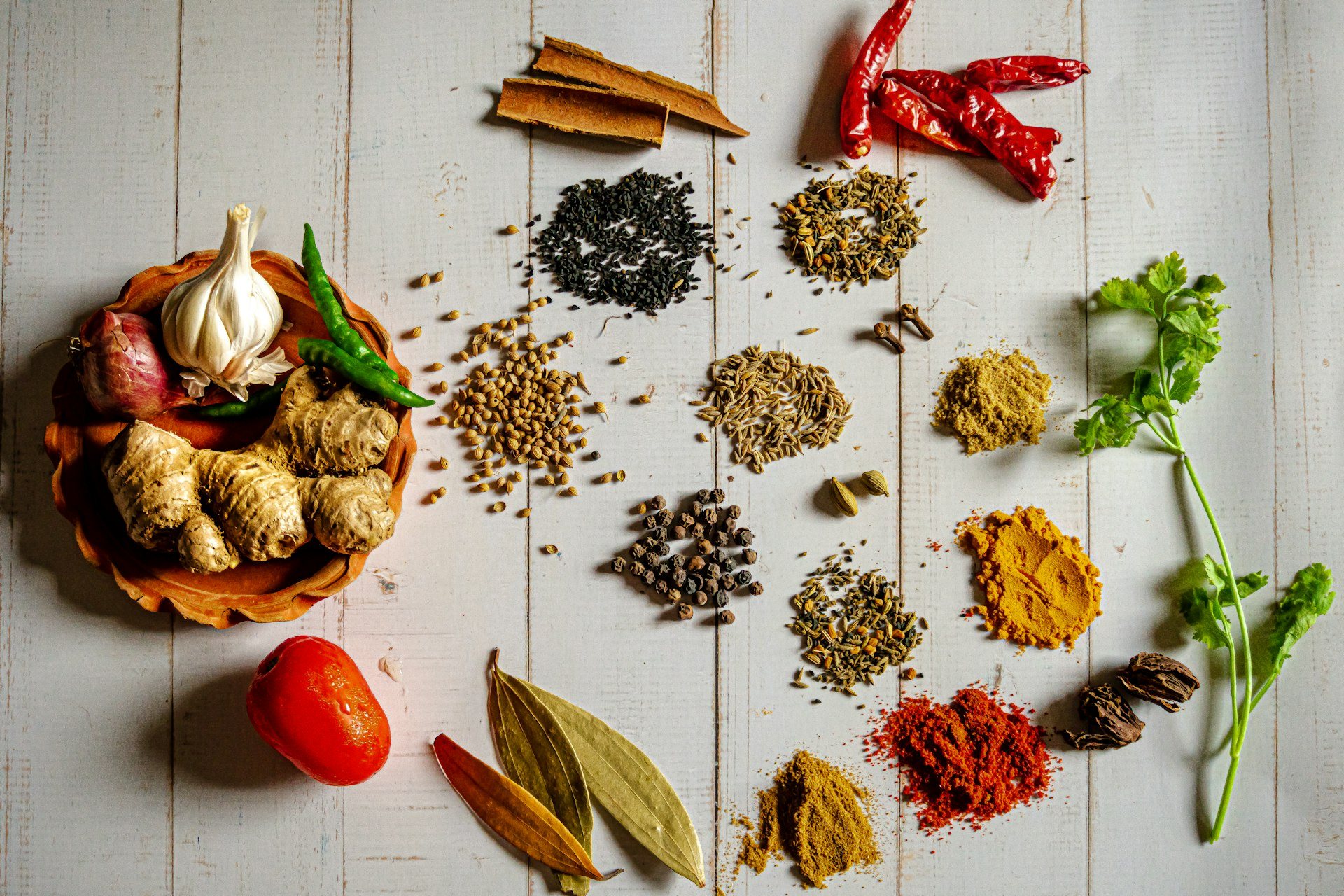
Authentic regional whole Indian spices and traditional culinary terroirs celebrating India's gastronomic diversity
THE CULINARY CONTINUUM • GASTRONOMIC FIELD GUIDE

Indian Cuisine — The Best Indian Food to Try Across India

There is no singular “Indian cuisine.” In a subcontinent of 1.4 billion people, food changes every fifty kilometers — shaped by monsoon rhythms, temple fasting codes, ancient trade winds, and Ayurvedic balance. Spices here are not blunt instruments of heat, but complex botanical melodies designed to heal, preserve, and elevate. For international travelers, this section adds practical context to places to visit in India.
THE SCIENCE OF BLOOMING • TADKA & CHHONK

Inside the Masala Dabba: Spice as Alchemy — Indian Cuisine

In every Indian kitchen sits a circular stainless-steel or brass canister holding seven essential spices. Spices are rarely thrown raw into water; they are “tempered” (*tadka*) in smoking mustard oil or golden ghee, releasing fat-soluble essential oils that awaken flavor and stimulate digestive enzymes (*Agni*). For international travelers, this section adds useful context to Indian cuisine.

Turmeric Haldi (हल्दी)

Curcumin • Anti-Inflammatory Base

The golden foundation of Indian kitchens. Earthy, slightly bitter, and deeply antiseptic. Used in curries not just for color, but to preserve meats and soothe the digestive lining.

Green Cardamom Elaichi (इलायची)

Cineole • Aromatic Cooling Sweetness

Native to the Western Ghats (Cardamom Hills). Cracked open in hot ghee to impart floral, minty top notes to royal biryanis, slow-steeped chai, and delicate festive kheer puddings.

Black Mustard Seeds Rai (राई)

Sinigrin • Pungent Piquant Sizzle

Essential to South Indian and Bengali cooking. Dropped into hot oil until they pop violently like miniature fireworks, releasing a nutty, wasabi-adjacent sharp aroma.

Asafoetida Hing (हींग)

Ferula Resin • Savory Allium Umami

A pungent dried plant resin used heavily in Jain and Brahmin cooking as a substitute for garlic and onions. Eliminates flatulence caused by slow-cooked lentils and legumes.

Kashmiri Chilli Kashmiri Mirch (कश्मीरी मिर्च)

Capsanthin • Rich Ruby Color, Mild Heat

Prized worldwide for giving Indian gravies their dramatic sunset-red glow without overwhelming the palate with blistering capsaicin heat. Mild, fruity, and deeply smoky.

Cumin Seeds Jeera (जीरा)

Cuminaldehyde • Earthy Warmth & Digestion

Toasted dry on iron skillets and ground coarse. Adds a musky, rustic baseline to dal, salted lassi, and vegetable stir-fries across every single Indian state.

SUB-CONTINENTAL GEOGRAPHY

Six Distinct Regional Flavor Terroirs — Best Indian Food To Try

Move across India's culinary map and watch ingredients pivot dramatically based on climate, soil, and religious tradition. For international travelers, this section adds useful context to best Indian food to try.

NORTHERN PLAINS & VALLEYS

Awadh, Punjab & Kashmir — Travel To India

Wheat-dominant, rich, and courtly. Features royal Awadhi *dum pukht* (slow steam cooking in sealed earthenware), clay tandoor-baked flatbreads (naan, paratha), and Kashmiri *Wazwan* perfumed with saffron, fennel, and dried ginger. For international travelers, this section adds practical context to travel to India.

Signatures: Dal Makhani, Rogan Josh, Kakori Kebab, Makki di Roti with Sarson da Saag.
PENINSULAR SOUTHERN SHORES

Tamil Nadu, Kerala & Deccan — Kerala Travel

Rice and coconut kingdom. Fermented lentil batters, crispy paper-thin dosas, steaming idlis, tangy tamarind sambar, peppery Chettinad gravies, and coastal Malabar coconut-milk fish curries served on fresh banana leaves. This section is especially useful for travelers researching Kerala travel.

Signatures: Masala Dosa, Kerala Fish Moilee, Hyderabadi Biryani, Pepper Chicken Chettinad.
EASTERN DELTAS & BENGAL

Bengal, Odisha & Assam — Places To Visit In Northeast India

Riverine, delicate, and mustard-driven. Cooked in pungent mustard oil with *Panch Phoron* (five-spice blend: fenugreek, nigella, cumin, black mustard, fennel). World-famous for sweet fresh-milk cheese (*chhena*) confectionary. This section is especially useful for travelers researching places to visit in Northeast India.

Signatures: Shorshe Ilish (Hilsa in mustard), Kosha Mangsho, Chhena Poda, Rasgulla.
WESTERN ARID & COASTAL

Gujarat, Maharashtra & Goa — India Travel Guide

From the 100% vegetarian sweet-savory balance of Gujarati thalis to the spicy fire of Kolhapuri *misal* and Goan Portuguese-influenced seafood infused with tart kokum and vinegar. For international travelers, this section adds practical context to India travel guide.

Signatures: Dhokla, Vada Pav, Kolhapuri Tambda Rassa, Goan Prawn Balchão.
NORTHEASTERN HILLS & FORESTS

Nagaland, Meghalaya & Assam — Northeast India Travel Guide

Completely distinct from mainland cooking: zero heavy cream or cumin. Focuses on smoked meats, bamboo shoot stews, fermented soybeans (*Axone*), wild medicinal mountain greens, and the fiery *Bhut Jolokia* ghost pepper. This section is especially useful for travelers researching Northeast India travel guide.

Signatures: Smoked Pork with Anishi, Jadoh Rice, Kaji Nemu Fish Curry, Masor Tenga.
CENTRAL HERITAGE & HEARTLAND

Madhya Pradesh & Malwa — Travel To India

The crossroads of North and South. Famous for morning poha-jalebi street culture, hearty *Dal Bafla* (boiled then ghee-baked whole-wheat dough balls), and rustic game curries born in royal hunting lodges. For international travelers, this section adds practical context to travel to India.

Key themes include Indian food, Indian street food, cultural experiences in India, helping international travelers plan an informed and memorable journey.

Signatures: Dal Bafla, Indori Poha, Bhutte ka Kees, Mawa Bati.
AYURVEDIC HARMONY ON A PLATTER

The Architecture of an Indian Thali — Indian Cuisine

A *Thali* is not just a platter of assorted bowls; it is a nutritional and philosophical mandala engineered thousands of years ago according to Ayurvedic science. A complete thali must incorporate all **Shad Rasa** (Six Tastes) to satiate the palate, nourish every tissue, and prevent overeating. For international travelers, this section adds useful context to Indian cuisine.

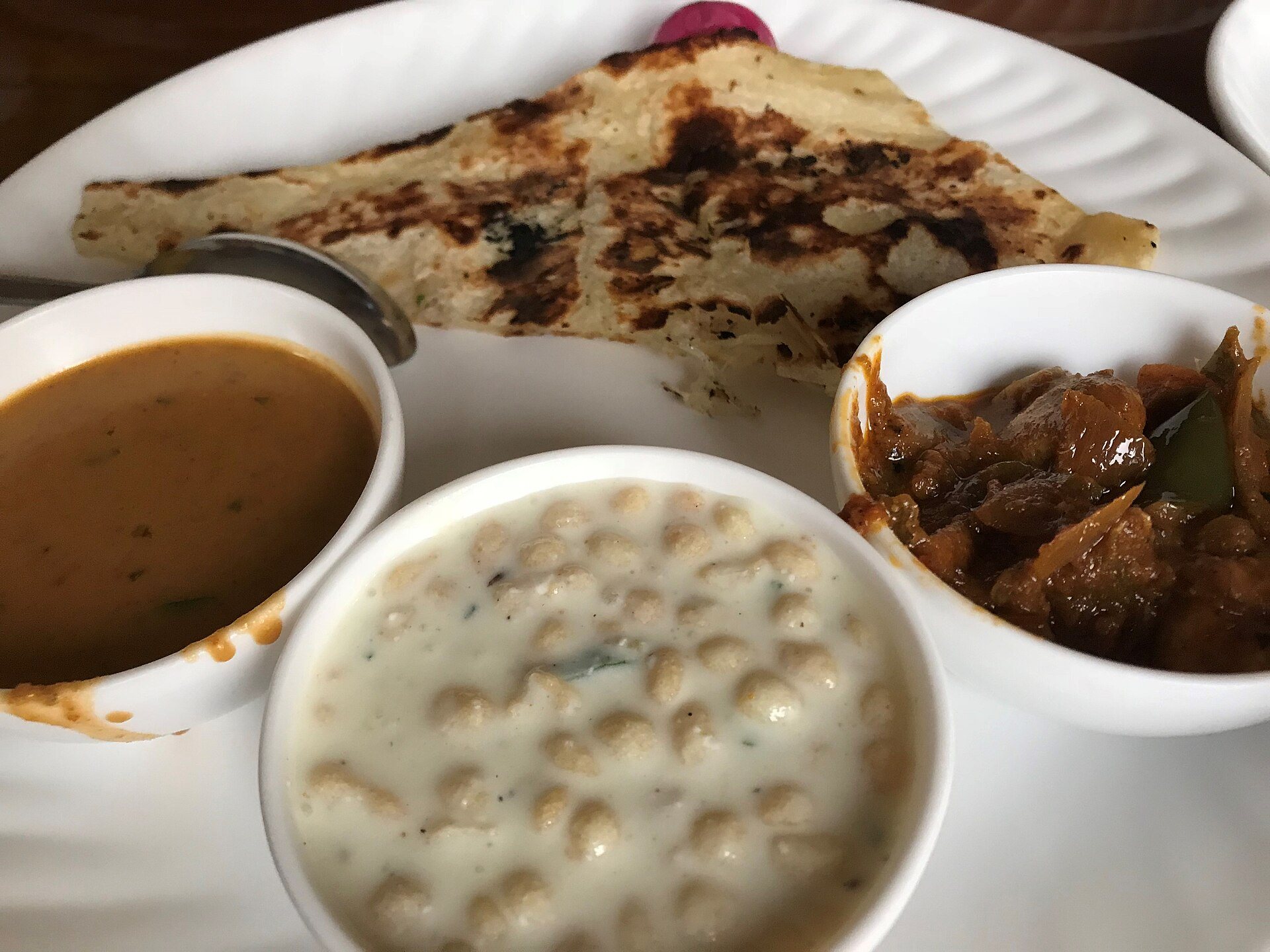
Notice the layout: grains (rice or roti) sit in the center representing grounding earth; lighter broths and cooling yogurts flank the sides; intense pickles and chutneys occupy tiny corners to act as digestive catalysts.

A traditional copper Indian thali with balanced brass katoris holding seasonal lentils, vegetables, and rice
Sweet (Madhura)
Earth & Water
Basmati Rice, Wheat Roti, Kheer
Sour (Amla)
Earth & Fire
Tamarind, Kokum, Curd / Raita
Salty (Lavana)
Water & Fire
Rock Salt, Papadum, Seasoning
Pungent (Katu)
Fire & Air
Ginger, Green Chilli, Black Pepper
Bitter (Tikta)
Air & Ether
Fenugreek, Bitter Gourd, Turmeric
Astringent (Kashaya)
Air & Earth
Lentils (Dal), Pomegranate, Betel
THE MORNING STREET RITUAL

How India Wakes Up: Breakfast by Region — Best Indian Food To Try

Long before coffee shops open, Indian street corners erupt with sizzling steam, clay chai cups (*kulhads*), and crisp breads. Breakfast is intensely regional and freshly cooked. For international travelers, this section adds useful context to best Indian food to try.

Southern Filter Coffee & Idli-Vada

Tamil Nadu & Karnataka

Pillowy steamed rice cakes (*idlis*) and crisp lentil doughnuts (*vadas*) plunged into piping hot vegetable sambar with freshly ground coconut chutney. Paired with frothy chicory filter coffee poured between steel tumblers.

Stuffed Parathas with White Butter

Punjab & Northern Plains

Whole-wheat flatbreads rolled with spiced potatoes (*aloo*), cauliflower (*gobi*), or fresh paneer, roasted on iron tawas and crowned with a dollop of fresh churned white butter (*makhan*) and sour mango pickle.

Poha-Jalebi Street Alchemy

Indore & Madhya Pradesh

Flattened rice flakes steamed with turmeric, mustard seeds, and crunchy fennel, topped with spicy sev and fresh pomegranate, served alongside piping-hot, pretzel-shaped crispy jalebis dripping with saffron sugar syrup.

Luchi & Aloor Dum

Kolkata & Bengal

Delicate, golden-puffed deep-fried refined-flour breads served with slow-braised baby potatoes in a dark, cumin-spiced tomato gravy. The quintessential Bengali Sunday breakfast.

PRACTICAL RESTAURANT CODE

The Foreign Diner's Ordering Compass — India Travel Guide

Walking into an Indian restaurant for the first time can be intimidating. Here is how to decode menus, communicate dietary boundaries, and eat with cultural ease. For international travelers, this section adds practical context to India travel guide.

Concept / Term What It Actually Means International Traveler Guidance
“Spicy” vs “Hot” “Spicy” (*Masaledar*) means rich with aromatic seeds; “Hot” (*Teekha*) refers to burning green chili capsaicin. If sensitive, ask: “Kam teekha, kripya” (Less chili heat, please). You will still enjoy all the complex aromatic flavors.
“Pure Veg” (Green Dot) 100% vegetarian kitchens with zero meat, fish, poultry, or eggs. Strict kitchen segregation. Guarantees zero cross-contamination. India is the easiest country in the world for vegetarian travelers.
Jain Preparation Vegetarian food prepared without any root vegetables (no onions, garlic, potatoes, or carrots). Extremely light on the stomach, highly aromatic, and ideal for travelers avoiding alliums.
Eating With Hands Eating rice and bread using only the fingertips of your right hand. Thermodynamically tests food heat before entering mouth. Wash hands thoroughly before and after at the washbasin provided in every dining room.
Gravy / Dry Dish Ratio Indian meals combine wet gravies (*tari/salan*) with dry sauteed vegetables (*sukhi sabzi*). Balance your order: 1 dal/lentil + 1 wet gravy + 1 dry vegetable + breads/rice. Do not order three heavy cream gravies.
DIGESTIVE HEALTH & HYGIENE

Sensible Dining Protocols for Foreign Visitors — Indian Food

Enjoying India's food scene does not require paranoia. It simply requires understanding food turnover, water sources, and heat. For international travelers, this section adds useful context to Indian food.

1. Freshly Cooked & Piping Hot

Food that is fried, boiled, or baked fresh on high flame in front of you (samosas, dosas, naans, tandoor kebabs) is microbiologically sterile. Avoid buffets where food has sat lukewarm for hours.

2. Water Vigilance

Drink only sealed branded bottled water (Kinley, Aquafina, Bisleri) or bring a reusable UV purification bottle. Decline tap-water ice cubes in roadside fruit juices.

3. Embrace Probiotics & Curd

Fresh set plain curd (*dahi*) and salted buttermilk (*chaas*) are packed with live lactobacillus that naturally protects the gut biome and cools fiery digestive heat.

WANT TO DINE LIKE A LOCAL ON THE STREET?

Explore the Street Food & Digestive Health Guide

STREET FOOD GUIDE → AYURVEDIC HEALING →
HEALTH & HYGIENE

Street Food Without Fear: Foreign Traveler Manual — Indian Cuisine

Learn the five golden rules of safe street eating, water hydrology rules, and natural Ayurvedic digestive remedies. For international travelers, this section adds useful context to Indian cuisine.

Read Street Food Guide →